
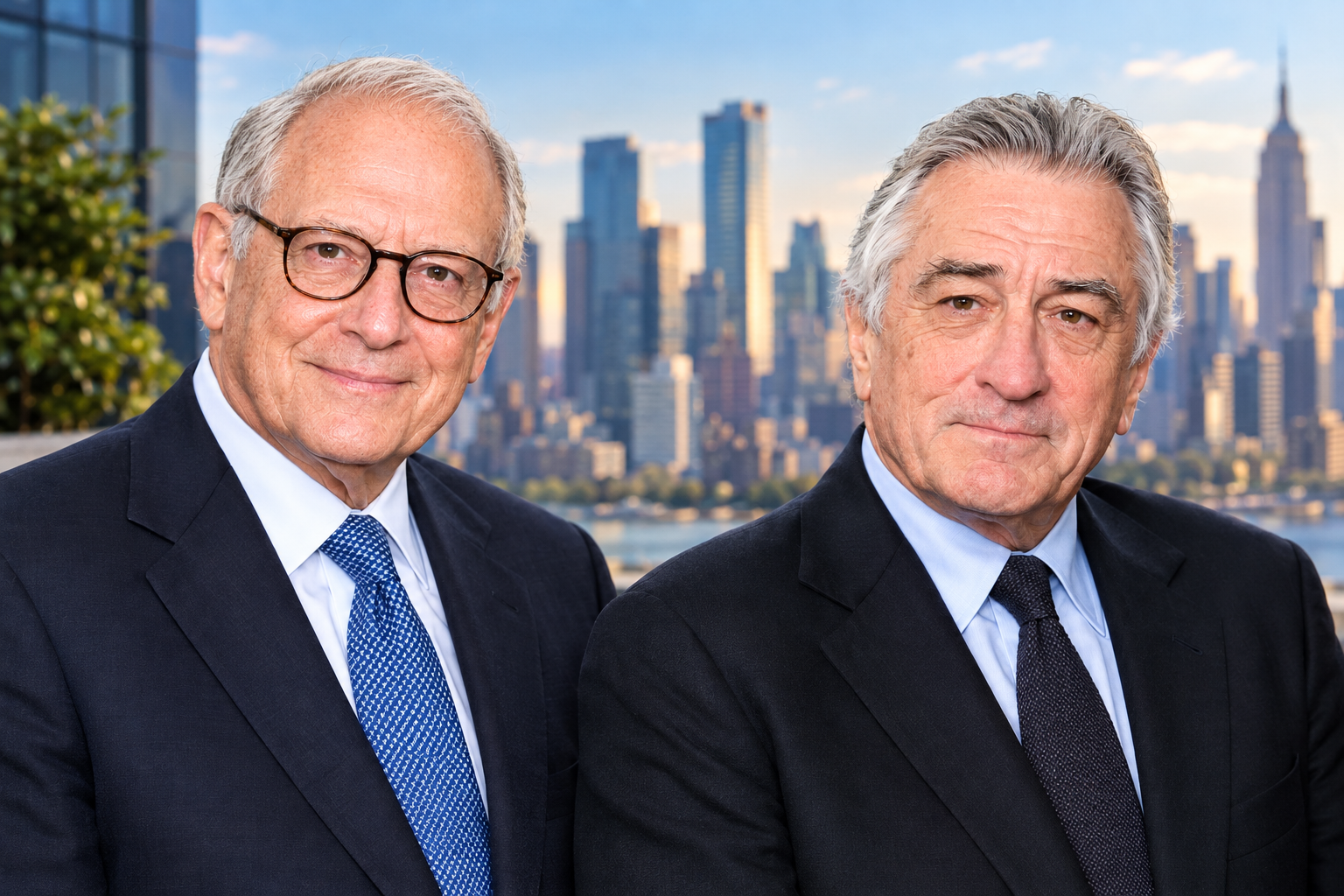
New York City is shaped by many different kinds of influence — money, culture, civic leadership, and creative vision all overlap in a city built by hundreds of individual contributors. Few pairings illustrate this better than jerry speyer and robert de niro, two men from entirely different worlds whose names are increasingly searched together because of how often their paths cross in the city’s business, cultural, and philanthropic circles.
Who Is Jerry Speyer?
Jerry I. Speyer, born June 23, 1940, in Milwaukee, Wisconsin, is one of the most influential figures in American commercial real estate. After earning his BA and MBA from Columbia University, he went on to co-found Tishman Speyer in 1978 alongside his father-in-law, Robert Tishman. The firm, headquartered at 45 Rockefeller Plaza, has grown into a global real estate powerhouse with tens of billions of dollars in assets under management, operations spanning New York, London, Madrid, Milan, and São Paulo, and a portfolio that has included landmark properties such as Rockefeller Center and the Chrysler Building.
Beyond real estate, Speyer has held significant civic roles, including chairman of the Federal Reserve Bank of New York and chairman of the Museum of Modern Art (MoMA). His decades of institutional leadership have made him a central figure not just in property development but in the broader network of business leaders who support hospitals, cultural institutions, and public memorials across the city.
Who Is Robert De Niro?
Robert De Niro needs little introduction as one of the most celebrated actors in film history. Known for iconic performances in Taxi Driver, Raging Bull, and The Godfather Part II, De Niro built a career that made him synonymous with serious, transformative acting. But his impact on New York extends well beyond the screen. As a longtime resident and advocate for Lower Manhattan, De Niro co-founded the Tribeca Festival in 2002, a cultural initiative widely credited with helping revive the neighborhood’s economy and spirit after the September 11 attacks. Through restaurants, production ventures, and cultural investment, De Niro has become deeply tied to the identity of downtown New York, much as Speyer has become tied to the city’s skyline.
Why People Search for “Jerry Speyer and Robert De Niro” Together
The connection between jerry speyer and robert de niro is not the result of a business partnership, shared company, or family tie. There is no direct financial relationship linking Tishman Speyer to any of De Niro’s ventures. Instead, the association comes from the fact that both men are towering figures in New York’s civic and social landscape, frequently appearing at the same benefit dinners, cultural galas, and institutional events. Photographs and event listings often place the two in the same rooms — award luncheons, museum benefits, and charitable functions — because both belong to an overlapping circle of New York power brokers who support the same causes.
This is a common pattern in major cities: real estate leaders, entertainment figures, philanthropists, and civic officials all intersect at fundraising events, hospital boards, and cultural institutions, even when their day-to-day work has nothing to do with one another. The search term jerry speyer and robert de niro reflects public curiosity about how these overlapping worlds connect, rather than pointing to any formal collaboration.
Their Shared Impact on New York City
Even without direct business ties, Speyer and De Niro represent two complementary forces that have shaped modern New York. Speyer’s work through Tishman Speyer has quite literally built the physical framework of the city — office towers, mixed-use developments, and iconic properties that define the Manhattan skyline. De Niro’s contributions, by contrast, are cultural and emotional. His involvement with Tribeca Festival transformed a neighborhood, brought global attention to independent film, and helped restore civic confidence in Lower Manhattan during a difficult period in the city’s history.
Both men, in their own ways, embody a kind of New York leadership that goes beyond their primary professions. Speyer’s civic roles — from the Federal Reserve Bank of New York to MoMA — show a commitment to institutional stewardship. De Niro’s investment in Tribeca reflects a similar instinct: using personal influence to strengthen the broader community rather than simply advancing an individual career or business. This is part of why the pairing of jerry speyer and robert de niro resonates with people trying to understand how New York’s different power structures reinforce one another.
Common Misconceptions
A recurring misconception is that Speyer and De Niro are business partners or have some kind of formal working relationship. This is not accurate. There is no shared company, joint venture, or documented financial partnership between them. Their connection is best understood as social and civic overlap — two prominent New Yorkers who move within the same philanthropic and institutional circles rather than collaborators on a shared project.
Conclusion
The story of jerry speyer and robert de niro is ultimately a story about New York City itself — a place where real estate power, cultural influence, and civic responsibility constantly intersect. Speyer built the physical infrastructure that houses the city’s economy, while De Niro helped restore its cultural identity through Tribeca and independent film. Neither man’s success depends on the other, yet their presence in the same civic and philanthropic spaces illustrates how a handful of individuals, working in very different industries, can collectively shape a city’s character. Understanding this dynamic offers a broader lesson: influence in a place like New York rarely comes from a single source, but from many contributors whose paths cross more often than people might expect.














Leave a Reply